
The fine print · Food & heart
Reading sodium on food labels, line by line
One gram of salt holds less than half a gram of sodium, and packages speak only of sodium. Where the day's allowance really goes, and how to read the panel.
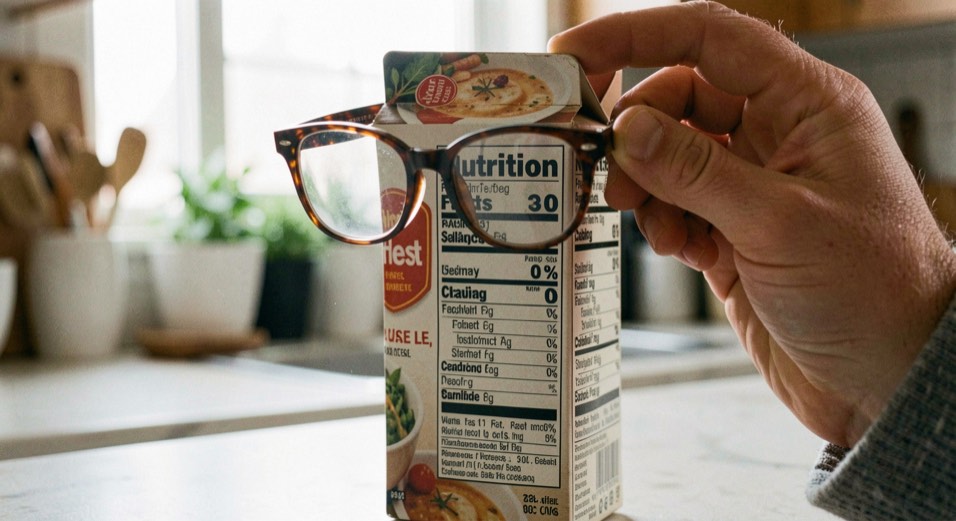
Table salt is about forty percent sodium by weight, which is why the labels never match the salt cellar: one gram of salt contains roughly four hundred milligrams of sodium, and it is the sodium the body reacts to. The World Health Organization recommends keeping sodium under two grams a day, about five grams of salt, and describes most populations as eating far beyond it. The striking part is where the excess lives: not in the shaker, which contributes a small minority, but in ordinary packaging.
The usual suspects, in order
Bread, quietly, is a top contributor in many countries: each slice carries a modest amount, and modest times several slices a day adds up. Canned soups and broths, deli meats and cured products, sauces from soy to salad dressing, cheese, salted snacks, and restaurant meals round out the list. None of these is forbidden; the point is that sodium is cumulative, invisible and evenly distributed across foods that do not taste particularly salty. Sweet bakery goods carry their share too, which surprises most readers.
How to read the panel
Nutrition panels list sodium in milligrams per serving, and the daily value percentage beside it is calculated against a reference of roughly 2,300 milligrams in the United States. Three habits make the panel useful. First, check the serving size, because a package that looks like one serving is often two. Second, read the percentage: five percent of the daily value or less per serving is generally considered low, twenty percent or more high, a rule used by national food agencies. Third, compare within a category when the shelf offers two versions of the same food; the differences are often large for no culinary reason.
Four kitchen moves that do the heavy lifting
- Cook the base foods yourself when time allows, because raw ingredients carry almost no sodium until a package enters the room.
- Rinse canned beans and vegetables in a colander; it removes a meaningful share of the brine's sodium without changing the dish.
- Season with acid and aromatics first: lemon, vinegar, garlic, onion, herbs and pepper recover much of the flavor salt was pretending to provide.
- Buy the low sodium version of the two or three packaged staples you actually eat weekly, and stop reading labels you never open.
The salt cellar is honest: you can see it working. The package is not; the salt arrives before the flavor does.
Why the effort matters is covered by the mechanism rather than the taste: habitual high sodium tends to raise blood pressure, and elevated pressure is the quiet load the heart works against, as the glossary entry on blood pressure explains. The blood pressure categories a clinician uses sit downstream of habits like this one. For the wider picture of the plate, the heart healthy foods page builds the whole pattern, and the prevention steps page situates sodium among the other levers that public health bodies repeat. People living with certain conditions, kidney disease first among them, follow individualized sodium targets set with their care team, not the general figure on this page.
Labels repay slow reading, and so do the pages we keep adding: breath meditation for beginners starts with five minutes at home, a first weekend retreat explains how to prepare for two days of silence, and what an annual exam covers answers a question that arrives every year.
Public sources cited on this page
Where to read next
- Heart healthy foods for everyday mealsResearch keeps pointing at eating patterns rather than single foods.
- How the heart works, explained simplyA muscle the size of a closed fist moves blood through about one hundred thousand beats a day.
- Glossary sheet: blood pressureThe term blood pressure defined in one page of the signature glossary.
- The everyday heart checklistTen lines that compress every habit this magazine explains.