
Patterns, not miracles · Food & heart
Heart healthy foods, in everyday meals
Research keeps pointing at eating patterns rather than single foods. Here is what a heart friendly week looks like when it is built from an ordinary supermarket.
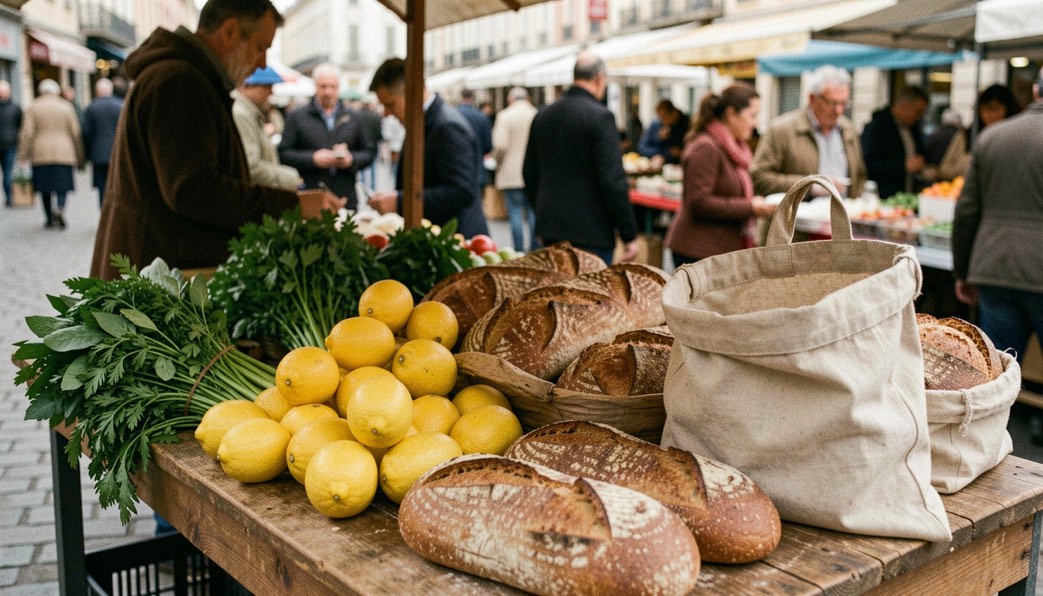
Every few months a food is crowned or condemned, and every few months the crown moves. Underneath the noise, the studied eating patterns associated with cardiovascular health, Mediterranean and DASH being the most cited, agree with unusual consistency. They are built from ordinary groceries, they tolerate an imperfect week, and none of them requires a supplement. This page assembles the pattern aisle by aisle, the way an actual shopping trip happens.
The base: vegetables, fruit, whole grains
In these patterns, plants are not a side; they are the base. Vegetables and fruit of any kind, fresh or frozen, carry fiber, potassium and volume for very little sodium. Whole grains, such as oats, barley, brown rice and whole grain bread, release their energy slowly and keep the digestive traffic moving. The WHO's guidance on healthy diet puts vegetables, fruit, legumes, nuts and whole grains at the center of the plate, with at least four hundred grams of fruit and vegetables a day as its familiar reference point. A practical translation: fill half the plate with plants, and let the rest follow.
Protein that is not always meat
Legumes are the quiet heroes of the pattern: lentils, chickpeas and beans deliver protein, fiber and minerals at a modest price, and they absorb flavor generously. Fish appears regularly in the studied patterns, with the American Heart Association pointing to about two servings a week, particularly of fatty fish. Poultry and eggs appear in moderation. Red meat appears occasionally rather than nightly, and processed meats are the one family the patterns keep pushing out, both for saturated fat and for sodium.
Fats: liquid over solid
The pattern's rule of thumb is geometric: fats that are liquid at room temperature, such as olive oil and most plant oils, over fats that are solid, such as butter, lard and the hydrogenated fats of industrial pastry. Nuts earn their small daily handful: they carry unsaturated fats, fiber and minerals, and portions matter because they are dense. Dairy, when it appears, leans plain: yogurt and milk rather than sweetened derivatives whose sugar load arrives disguised.
What the pattern keeps low
Three families get squeezed, none of them by moralizing. Sodium, because it tends to raise blood pressure, with the WHO recommending less than two grams a day; the sodium page shows how much of it hides in bread, soup and sauces. Added sugars, because they add energy without adding anything. And alcohol, where guidance is drifting toward less is better, and none is fine. None of these needs to be zero in a home kitchen; they need to be the exception rather than the structure.
A week that eats like the pattern
- A pot of lentils on Sunday becomes soup, then salad, then a mash on toast across three days.
- Two fish meals a week, one fresh if it is convenient, one frozen if it is not; both count.
- A grain bowl template: whole grain, whatever vegetables are tired in the drawer, a protein, oil and lemon.
- Fruit as the default dessert most nights, with the actual dessert reserved for the nights that earn it.
The pattern forgives the odd weekend. It only asks that the week, on average, looks like itself.
One caution belongs in bold print: this magazine describes eating patterns for general readers, never diets for conditions. Sodium restrictions, kidney considerations, pregnancy, allergies and medication interactions all change the arithmetic, and a registered dietitian or a clinician adapts the pattern to a person. For the context around all of this, the heart disease prevention steps page places food among the other levers, and the everyday heart checklist compresses the whole approach into a page to pin somewhere visible.
Meals are one part of a wider picture. hip dysplasia in shepherd dogs follows weight, exercise and recovery, why we write about the heart in plain words explains the editorial line behind every page here, and writing an infection control plan takes the same routine thinking into a shop.
Public sources cited on this page
Where to read next
- Reading sodium on food labelsOne gram of salt holds less than half a gram of sodium, and packages speak only of sodium.
- How the heart works, explained simplyA muscle the size of a closed fist moves blood through about one hundred thousand beats a day.
- Glossary sheet: blood pressureThe term blood pressure defined in one page of the signature glossary.
- The everyday heart checklistTen lines that compress every habit this magazine explains.